





Updated on 03 February 2025
Electric vehicles (EVs) have been around for decades, but have only recently become mainstream. In recent years, there has been a surge in interest in EVs, driven by concerns about climate change and the rising cost of gasoline. However, some people have questioned whether electric vehicles in Australia are the future of automotive.
If you’re interested in embracing sustainable energy beyond electric vehicles, consider exploring solar options with Energy Matters. Get FREE solar quotes to discover how renewable energy can play a pivotal role in shaping a greener and more sustainable future.
In this blog, we will explore the advantages and downsides of electric vehicles and the broader context in which they operate, providing a comprehensive understanding of their role in the future of transportation.
Attention, automobile enthusiasts! Are you prepared to embark on an electrifying journey with your next car? Brace yourself for a groundbreaking opportunity that will revolutionise your driving experience. Don’t miss out on this exclusive chance to book a test drive in one of your neighbourhood’s latest and most cutting-edge electric vehicles (EVs)!
So, what are you waiting for? Seize this moment to revolutionise your driving experience. Be a trendsetter, an innovator, and a protector of our planet. Book your test drive today and prepare to join the growing community of electric vehicle enthusiasts. The road to a sustainable and electrifying future awaits – don’t miss your chance to be part of it!
Are electric cars the future?
Electric vehicles (EVs) are becoming increasingly popular, and many analysts believe they will eventually replace carbon-emitting vehicles. However, some challenges need to be addressed before EVs can become mainstream.
The current state of play
While EV adoption in Australia has lagged that of other developed nations, sales have increased markedly in recent years.
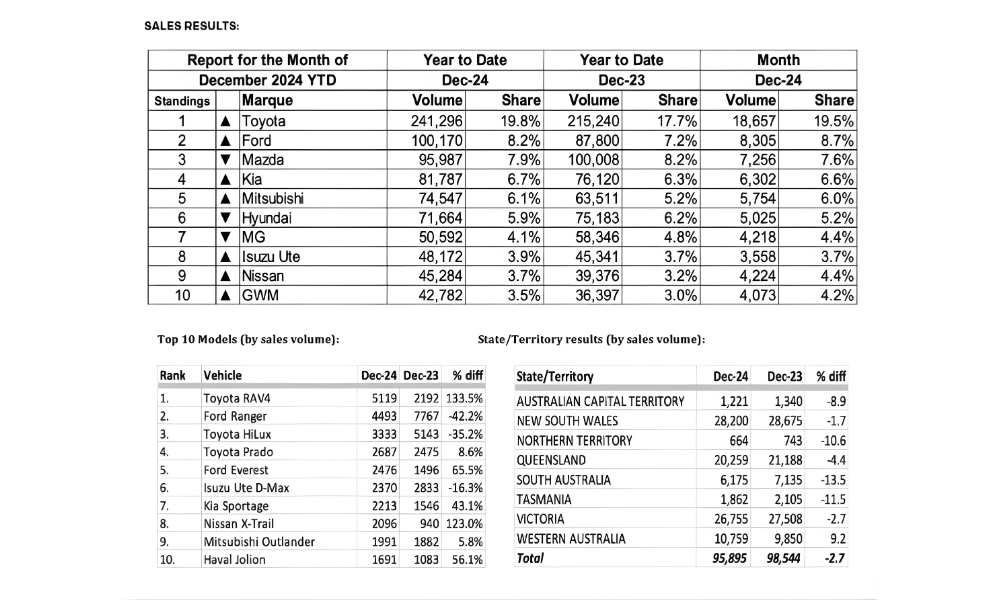
VFACTS December 2024
Although still a tiny percentage of the overall market, EV sales have consistently grown, indicating a shift in consumer sentiment. Data from the Federal Chamber of Automotive Industries (FCAI) report, known as VFACTS, shows a substantial increase in EV sales in recent years.
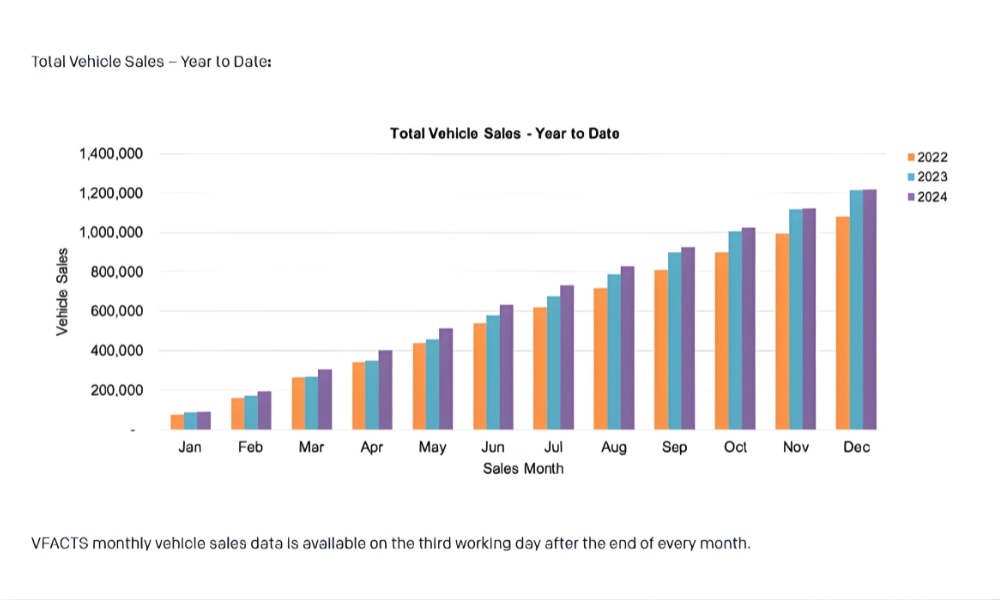
With 18,657 sales in December, Toyota led the market, followed by Ford (8,305), Mazda (7,256), Kia (6,302), and Mitsubishi (5,754). With 5,119 units sold, the Toyota RAV4 was the best-selling car in Australia. The Ford Ranger (4,493), Toyota HiLux (3,333), Toyota Prado (2,687), and Ford Everest (2,476) followed.
Sales in the Australian Capital Territory fell 8.9% to 1,221 in December 2024, while New South Wales fell 1.7% to 28,200, the Northern Territory fell 10.6% to 664, Queensland fell 4.4% to 20,259, South Australia fell 13.5% to 6,175; Tasmania fell 11.5% to 1,862; Victoria fell 2.7% to 26,755, and Western Australia rose 9.2% to 10,759.
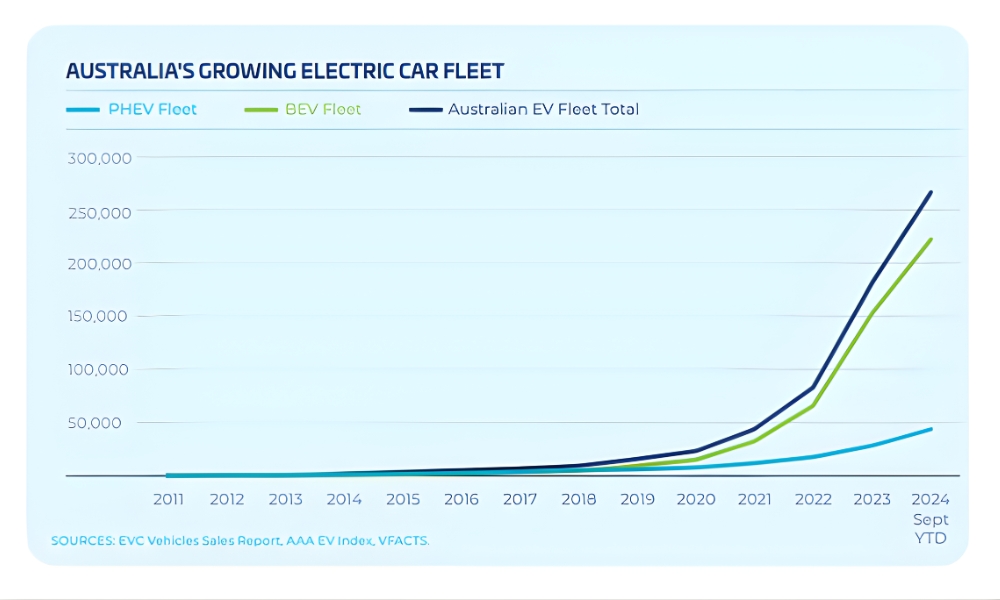
According to data from the Electric Vehicle Council (EVC) and public sources, about 114,000 new battery electric vehicles (BEVs) and plug-in hybrid electric vehicles (PHEVs) were sold in Australia in September 2024, up from the previous high of over 98,000 in 2023.
In 2024, about 23,000 PHEVs and 91,000 BEVs were sold as new EVs. This indicates that EVs accounted for 9.65% of all new-car purchases, or 8.45% market share, in 2023.
Drivers of EV adoption
Several key factors are driving the increasing interest in EVs in Australia:
- Environmental concerns: Growing awareness of climate change and the contribution of traditional combustion engine vehicles to greenhouse gas emissions is a significant catalyst. EVs offer a cleaner alternative, reducing reliance on fossil fuels and lowering carbon footprints. Use Energy Matters’ carbon footprint calculator to calculate your household and business’s direct emissions.
- Running costs: While the initial purchase price of an EV can be higher, its running costs are generally lower due to lower electricity costs than those for petrol or diesel. Reduced maintenance requirements, with fewer moving parts, also contribute to cost savings over the vehicle’s lifespan.
- Government incentives: Both federal and state governments have introduced various incentives to encourage EV uptake, including rebates, tax breaks, and stamp duty exemptions. These incentives help to offset the higher upfront cost of EVs and make them more accessible to consumers. The specifics of these EV incentives and rebates are subject to change, so it’s essential to research the current programs in your state.
- Technological advancements: Rapid advances in battery technology have led to increased range, faster charging times, and lower battery costs. This makes EVs more practical and appealing to a broader range of drivers.
- Increased model availability: As more manufacturers enter the EV market, the range of models available to Australian consumers is expanding. This provides greater choice, allowing consumers to find an EV that suits their needs and budget.




Are you ready to embrace a greener future by installing an electric vehicle (EV) charger? Imagine the convenience of having your own charging station, so you can charge your EV whenever it’s convenient for you. You can help clean the environment and combat climate change by installing an EV charger at your home or business. Energy Matters‘ trusted local installers are ready to provide you with a personalised quote tailored to your specific needs.
Don’t wait any longer; request your quote today and be part of the EV charging revolution!
Opportunities for electric cars
One of the biggest opportunities for EVs is in the urban mobility market. EVs are well-suited for city driving because they are quiet, efficient, and require a low range. Additionally, EVs can be used in car-sharing programs, helping reduce traffic congestion and air pollution.
Another opportunity for EVs is in the commercial vehicle market. Electric trucks and buses are becoming more common, and they can help reduce transportation emissions.
Electric vehicles are still the future of the automotive industry. The shift toward clean, sustainable transportation is not only driven by environmental concerns but also by technological advancements, government policies, and consumer preferences. While challenges exist, ongoing research, infrastructure, and affordability investments steadily push EVs closer to mainstream adoption. As the automotive industry continues to evolve, electric vehicles will play a crucial role in shaping the future of mobility.
Challenges and hurdles
While EVs have made significant strides, several challenges still need to be addressed:
Range anxiety: Concerns about EV range and the availability of charging infrastructure can deter potential buyers. However, investments in charging networks are expanding, alleviating some of these concerns.
Initial cost: EVs tend to have higher upfront costs than traditional vehicles, primarily due to battery costs. However, this cost differential gradually decreases as technology advances and production scales up.
Charging infrastructure: Although it is improving, it must catch up with the convenience of refuelling at traditional gas stations. Faster charging and more extensive coverage are needed for widespread EV adoption.
Battery recycling: The disposal and recycling of lithium-ion batteries pose environmental challenges. Developing sustainable recycling methods is crucial to minimise the ecological impact of EVs.
Summary and key points to become mainstream
The rise of electric vehicles
Electric vehicles have experienced significant growth and development in recent years. Here are several factors that have contributed to this rise:
Environmental concerns: With growing concerns about climate change and air pollution, governments worldwide are implementing stricter emission regulations. This has accelerated the shift towards cleaner transportation options, including EVs.
Technological advancements: Battery technology advancements have improved EV range, charging infrastructure, and affordability. EVs are becoming more practical and accessible to a broader range of consumers.
Consumer demand: Many consumers are now more conscious of their environmental footprint and are increasingly interested in sustainable transportation options. EVs offer a more eco-friendly alternative to traditional internal combustion engine (ICE) vehicles.
Government incentives: Various governments have introduced incentives and subsidies to promote EV adoption. These incentives can include tax credits, rebates, and expanded charging networks.
Read more about electric vehicles
- Everything You Need to Know About EVs: Buying, Owning and Charging an Electric Vehicle
- The Electric Vehicle Revolution Down Under: Are EVs Worth It in Australia?
- EV Challenges: How Do I Charge My Electric Vehicle in an Apartment?
- Rising Tide of Sustainability: Electric Vehicles Capture 8% Market Share in May, Reflecting Growing Consumer Interest


Looking ahead to 2025 and beyond
2025 is expected to be a crucial year for EV adoption in Australia. Continued advancements in battery technology, increasing model availability, and ongoing government support are expected to drive further growth in EV sales. Expanding the charging network will also play a critical role in alleviating range anxiety and making EVs a more viable option for a more significant number of drivers.
Predictions regarding the exact market share of EVs in 2025 vary. However, it is widely expected that EVs will continue to gain market share, and 2025 could mark a tipping point where EV adoption accelerates significantly. Beyond 2025, the trajectory of EV adoption will depend on several factors, including technological advancements, government policies, and consumer acceptance. In the coming decade, EVs could become dominant in the Australian automotive market.
The future of automotive?
While challenges remain, the trajectory is clear. Electric vehicles are poised to play an increasingly important role in the Australian automotive landscape. The convergence of environmental concerns, technological advancements, and economic factors creates a powerful momentum behind EV adoption. While it’s difficult to predict the exact timeline, it’s increasingly likely that electric vehicles are the future of automotive in Australia.
Ready to embrace the electric revolution?
Explore your area’s latest EV models, government incentives, and charging options. Don’t get left behind – the future of driving is electric! Contact Energy Matters today to discuss your home charging solutions and take the first step towards a cleaner, more sustainable driving experience.
Going solar
Are you looking to save money on your electricity bills and reduce your carbon footprint? Solar energy is the perfect solution! Energy Matters can help you get up to 3 FREE quotes from pre-qualified and vetted solar firms in your area.
Energy Matters is one of Australia’s most trusted solar quote providers, thanks to our high customer satisfaction and industry recommendations. Our team of solar experts can help you get up to 3 FREE solar quotes from pre-qualified and vetted solar firms in your area. Let’s harness the power of the sun together!